Electrical enclosure and switchgear manufacturers are under pressure from every direction: data-center expansion, power-distribution demand, labor shortages, tighter delivery schedules, and higher expectations for repeatable quality.
For many plants, the bottleneck shows up at the press brake.
Cabinet doors, covers, enclosure bodies, side panels, backs, flanges, returns, and long panels all require accuracy. But when those parts depend heavily on skilled brake operators, production can slow down quickly. Every setup, handoff, flip, alignment, and inspection adds labor and variability.
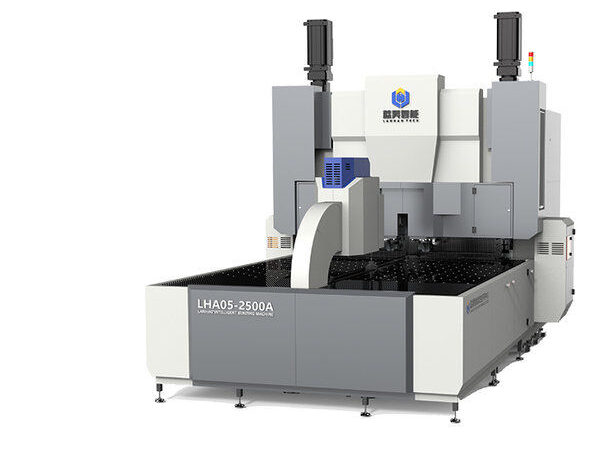
That is where the Lanhao Tech panel bender creates a serious opportunity.
Lanhao gives manufacturers a practical way to move repetitive enclosure and cabinet-style work away from manual brake dependency and onto a more automated bending process. The machine is designed for repeatability, speed, part consistency, and reduced handling. Its cast machine base and cast bending arm provide the rigidity and stability required for consistent bending performance, especially on longer panels and cabinet-style work.
Compared with premium panel bender brands such as TRUMPF, Prima Power, RAS, Salvagnini and LVD, Lanhao’s strongest advantage is the relationship between capability and capital cost. It gives manufacturers a credible panel-bending platform without requiring the same level of investment often associated with premium European systems.
For a VP of Manufacturing or Manufacturing Engineer, the business case is straightforward: improve throughput, reduce skilled-labor dependency, improve consistency, reduce bottlenecks, and free press brakes for work they are better suited to handle.
Blackout Equipment represents Lanhao in the U.S. market. Greg Sweigert brings 40 years of machine-tool experience as an operator, general manager, company president, and machine-tool sales professional. He can help manufacturers evaluate whether Lanhao fits their part mix, workflow, production demands, and ROI expectations.
Call to Action:
Contact Blackout Equipment to review your enclosure, switchgear, or data-center infrastructure parts and determine where panel bending can reduce cost and increase capacity.